
Popular articles

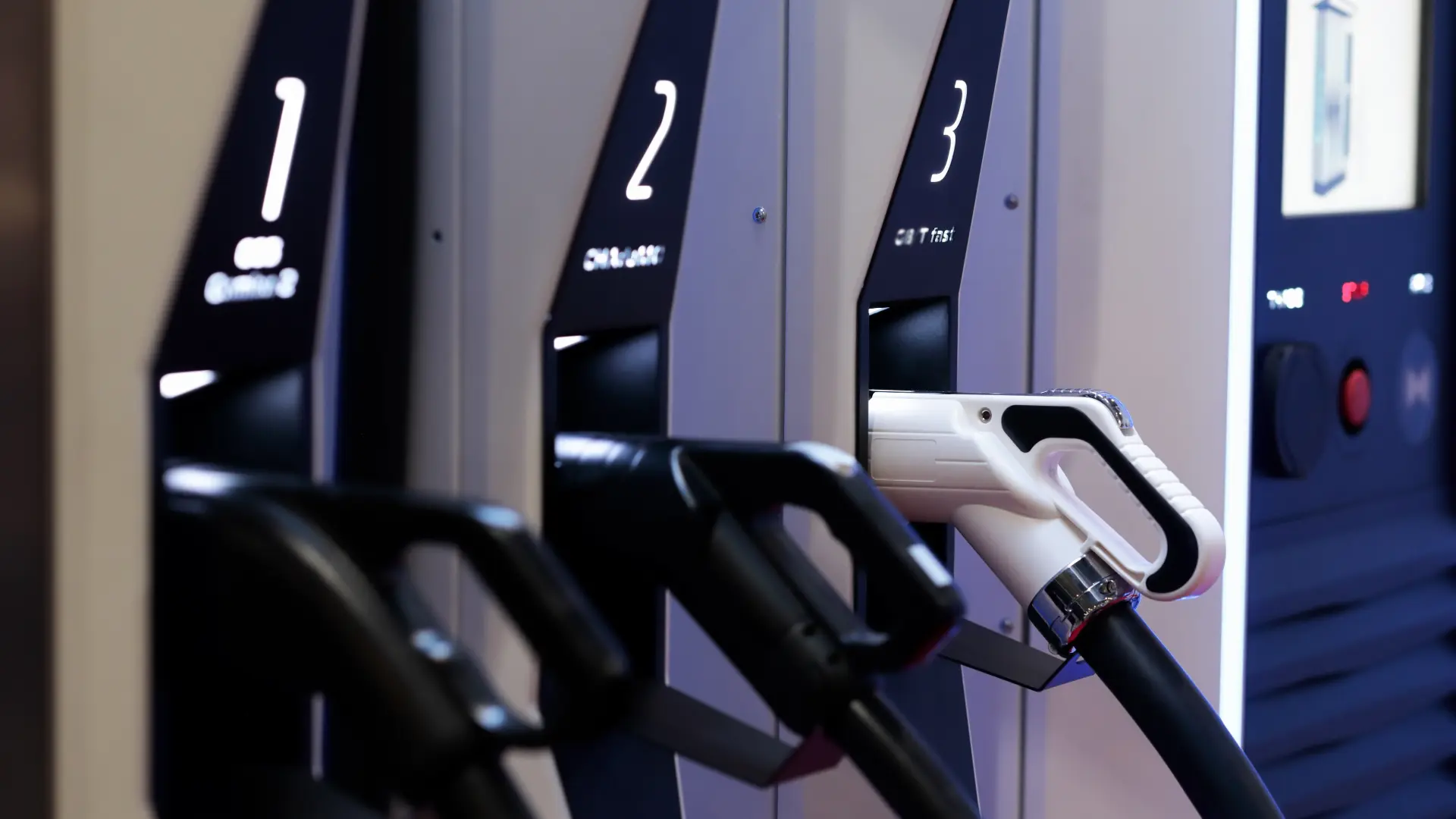




You pull into a public charging station, plug in your electric car and tap Start. A few moments later, the charging session begins.
Easy enough. But between plugging in and seeing those first kilowatt-hours appear, quite a lot happens.
Your car talks to the charger. The charger communicates with its operator. Your charging app checks whether the session can start. And somewhere in the background, a payment system gets involved.
Here's how public EV charging actually works, without turning it into an engineering lesson.
Public charging is a team effort
When you use a public EV charger, you're interacting with more than a piece of hardware.
There are several systems working together, each with a different job.
Your electric car manages its battery and determines how much charging power it can accept.
The charging station provides the physical connection, controls the power delivery and measures the energy transferred.
The charge point operator (CPO) runs the charging infrastructure and the software systems behind it.
Your charging app or mobility service provider helps you access the charging network, authorise a session and manage the charging service.
And finally, a payment service handles the financial side.
Sometimes one company manages several of these roles. Other times, they're spread across different businesses.
That's why you can often use a single charging app at stations operated by several different networks.
But how does it all come together?
Step 1: Plugging in starts a conversation, not the charging
The first thing that happens when you connect the cable isn't electricity flowing into the battery.
It's a safety check.
Your car and the charging station need to establish that the connector is properly inserted and that the conditions for charging are safe.
On most public charging systems, the connector is also locked during charging to prevent accidental disconnection.
Only when the necessary checks and permissions are complete can energy begin to flow.
There's also an important difference between AC and DC charging.
With AC charging, the vehicle's onboard charger converts alternating current into the direct current needed by the battery.
With DC fast charging, the conversion happens in the charging station, which supplies controlled direct current to the vehicle.
The technical setup differs, but the basic principle is the same: the car and charger must work together before charging can begin.
And plugging in doesn't always have to be the first step. Some charging systems ask you to authenticate or activate the station before connecting the cable.
Step 2: Your app asks for permission
Imagine you're at a motorway charging stop. You've connected your car to a 150 kW charger and you're ready to start a session using EV.app.
When you tap Start, the app doesn't directly switch on the electrical supply.
Instead, it sends a request through the relevant service systems.
Those systems need to establish a few things.
Are you using the correct charging station and connector? Is the charger available? Is your account authorised? Have any required payment checks been completed?
Once the necessary conditions are met, the operator's system can authorise the charger to begin the session.
This gets especially interesting when your charging app and the physical charger belong to different providers.
The connection between charging service providers and charge point operators is commonly called EV charging roaming.
Think of mobile phone roaming: you're using a service through infrastructure operated by another company.
The difference is that instead of making a call, you're starting a charging session.
Of course, not every public charging session needs an app.
Depending on the charger, you might use an RFID charging card, pay directly with a bank card or use Plug & Charge, where a compatible car can identify itself automatically.
Different methods, similar goal: making sure the right session is authorised for the right vehicle and user.
Step 3: The car decides how much power it can accept
Here's something that surprises many new EV drivers.
A 150 kW charger won't necessarily charge your car at 150 kW.
The number on the charging station describes its available or maximum rated power. It's not a guaranteed charging speed.
Your vehicle has limits of its own.
The battery's temperature, current state of charge (SOC), charging capabilities and battery management system all influence how quickly energy can be added.
The charging station's available power can also change, particularly at sites where several vehicles share electrical capacity.
During DC charging, the vehicle and charger continuously coordinate the electrical conditions needed for safe power delivery.
This is why the charging power might start relatively low, climb as the battery reaches a suitable temperature, and then decrease as the battery fills up.
That changing speed is known as the charging curve.
It's also why two cars connected to identical chargers can have very different charging experiences.
The charger provides the capability. The car, battery conditions and available infrastructure determine how much of it can actually be used.
Step 4: The charging station reports what's happening
While you're grabbing a coffee, another conversation continues in the background.
The charging station communicates with its operator's management system.
It can send information about the session status, energy delivered, meter readings and potential errors.
One widely used communication standard for this connection is OCPP, short for Open Charge Point Protocol.
If another charging service provider is involved, information may also be exchanged through a protocol such as OCPI, the Open Charge Point Interface.
These systems help charging networks share the information needed to run public charging services.
You don't need to know either acronym to use an EV charger.
But they explain why a charging app can display information from a station that belongs to a completely different operator.
Why doesn't my charging app show exactly what my car shows?
There's a catch: different systems don't always have access to the same data.
For example, a charger can measure how many kilowatt-hours have been delivered without necessarily knowing the battery percentage displayed in your car.
And the information you see in an app may arrive with a short delay.
So if the charger or vehicle says charging has started but the app takes a little longer to update, that doesn't automatically mean something is wrong.
The car, charger and application are connected, but they're not necessarily sharing every piece of information in real time.
Step 5: Payment starts before you finish
Charging costs are another part of the process that happens largely out of sight.
Depending on the charging service, your payment method might be checked before the session begins.
Some providers also use a pre-authorisation hold, temporarily reserving an amount on your payment card.
This isn't necessarily your final charging cost.
It's a way to check that the payment method can cover the transaction.
The actual charge depends on the applicable tariff and the completed session.
Most commonly, the price includes energy delivered, measured in kWh. But some tariffs also have time-based components or fees for remaining connected after charging has finished.
That's why the advertised price per kWh isn't always the whole story.
When the session ends, the operator's system records the relevant charging information. If you charged through another provider's app, that information may also need to be exchanged between the two companies.
The payment service then processes the final amount according to the applicable arrangement.
A temporary card hold may remain visible until your bank releases it. Similarly, a completed charging session might not appear immediately in your transaction history.
Neither necessarily means you were charged twice.
Step 6: Stopping the charge closes the loop
Your battery has reached the level you wanted. Time to hit the road.
Depending on the station and how you started the session, you can usually stop charging through the app, the charging station or the vehicle's controls.
The charging system then stops energy transfer and closes the session.
The connector can be released once the required conditions are met. Some cars also require a separate unlock action before you can remove the cable.
Never force a locked connector. First confirm that the charging session has stopped, then follow your vehicle's unlocking instructions.
Meanwhile, the background systems still have one final job.
They need to record what happened.
This includes relevant information such as the energy delivered, session timing and data needed to calculate the applicable charges.
A charging record is created for billing and, when necessary, shared between the providers involved.
Only then is the financial side of the session fully settled.
Why does public EV charging sometimes fail to start?
Knowing what happens behind the scenes makes charging problems much easier to understand.
Suppose you've plugged in and pressed Start, but nothing happens.
The issue could be with the physical connection, the vehicle's settings, the payment authorisation, the operator's network connection or communication between different service providers.
It doesn't always mean the charger itself is broken.
Before trying again, check the basics:
- Correct connector: Make sure the charging point selected in the app matches the one connected to your car.
- Vehicle status: Check whether the car is ready to charge or has reached a scheduled charging limit.
- Session status: Look for an active session or an error message on the app and charger.
- Payment method: Confirm that your selected payment option is valid.
If the problem continues, follow the instructions shown on the station or contact the charging operator.
And if your first attempt appears to have failed, check that it hasn't left an active session behind before starting another one.
A simple experience built on some serious teamwork
A public charging session connects the physical and digital sides of electric mobility.
Your car and the charger manage energy safely. The operator keeps the station connected. The charging service handles access. And the payment system makes sure the session can be billed correctly.
When everything works, you barely notice any of it.
That's exactly the point.
Because a good charging experience isn't about understanding every system behind the screen. It's about plugging in, charging up and getting back to whatever brought you there in the first place.